abbreviations and references

Abbreviations:
AASLD=American Association for the Study of Liver Diseases; ASCO=American Society of Clinical Oncology; BCLC=Barcelona Clinic Liver Cancer;
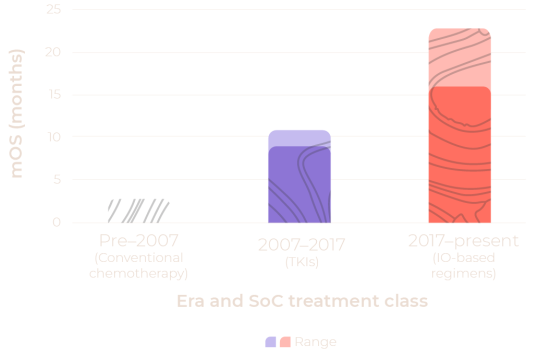
HCC=hepatocellular carcinoma; IO=immunotherapy; mOS=median overall survival; NCCN=National Comprehensive Cancer Network; SoC=standard of care; TKI=tyrosine kinase inhibitor.
References:
1. Referenced with permission from the NCCN Clinical Practice Guidelines in Oncology (NCCN Guidelines) for Hepatocellular Carcinoma V.1.2025. © National Comprehensive Cancer Network, Inc. 2025. All rights reserved. Accessed September 30, 2025. To view the most recent and complete version of the guideline, go online to NCCN.org; 2. Llovet JM, et al. Sorafenib in Advanced Hepatocellular Carcinoma. N Engl J Med. 2008;359(4):378–390; 3. Cidon EU. Systemic treatment of hepatocellular carcinoma: Past, present and future. World J Hepatol. 2017;9(18):797–807; 4. Lai CL, et al. Doxorubicin Versus No Antitumor Therapy in Inoperable Hepatocellular Carcinoma. A prospective randomized trial. Cancer. 1988;62(3):479–483; 5. Liu J, et al. Small molecule tyrosine kinase inhibitors approved for systemic therapy of advanced hepatocellular carcinoma: recent advances and future perspectives. Discov Oncol. 2024;15(1):259; 6. Kudo M. Management of Hepatocellular Carcinoma in Japan as a World-Leading Model. Liver Cancer. 2018;7(2):134–147; 7. Alqahtani SA and Colombo MG. Current status of first-line therapy, anti-angiogenic therapy and its combinations of other agents for unresectable hepatocellular carcinoma. World J Gastrointest Oncol. 2021;13(12):2038–2049; 8. Zhang H, et al. Recent advances in systemic therapy for hepatocellular carcinoma. Biomark Res. 2022;10(1):3; 9. Lazzaro A and Hartshorn KL. A Comprehensive Narrative Review on the History, Current Landscape, and Future Directions of Hepatocellular Carcinoma (HCC) Systemic Therapy. Cancers (Basel). 2023;15(9):2506; 10. Patel TH, et al. FDA Approval Summary: Tremelimumab in combination with durvalumab for the treatment of patients with unresectable hepatocellular carcinoma. Clin Cancer Res. 2024;30(2):269–273; 11. Yau T, et al. Efficacy and Safety of Nivolumab Plus Ipilimumab in Patients With Advanced Hepatocellular Carcinoma Previously Treated With Sorafenib: The CheckMate 040 Randomized Clinical Trial. JAMA Oncol. 2020;6(11):e204564; 11. Efficacy and Safety of Nivolumab Plus Ipilimumab in Patients With Advanced Hepatocellular Carcinoma Previously Treated With Sorafenib. JAMA Oncol. 2020;6(11):e204564. 12. Melero I, et al. Nivolumab plus ipilimumab combination therapy in patients with advanced hepatocellular carcinoma previously treated with sorafenib: 5-year results from CheckMate 040. Ann Oncol. 2024;35(6):537–548; 13. Rimassa L, et al. Five-year overall survival update from the HIMALAYA study of tremelimumab plus durvalumab in unresectable HCC. J Hepatol. 2025;83(4):899–908; 14. Yau T, et al. Nivolumab plus ipilimumab versus lenvatinib or sorafenib as first-line treatment for unresectable hepatocellular carcinoma (CheckMate 9DW): an open-label, randomised, phase 3 trial. Lancet. 2025;405(10492):1851–1864; 15. Singal AG, et al. AASLD Practice Guidance on prevention, diagnosis, and treatment of hepatocellular carcinoma. Hepatology. 2023;78(6):1922–1965; 16. Reig M, et al. BCLC strategy for prognosis prediction and treatment recommendation: The 2022 update. J Hepatol. 2022;76(3):681–693; 17. Gordan JD, et al. Systemic Therapy for Advanced Hepatocellular Carcinoma: ASCO Guideline Update. J Clin Oncol. 2024;42(15):1830–1850.