This site is intended for US healthcare professionals.

logo
Hero background

Diagnosis
and staging

IN HEPATOCELLULAR CARCINOMA (HCC)

Several international guidelines for HCC management, including those developed by American Association for the Study of Liver Diseases (AASLD),1 National Cancer Comprehensive Network (NCCN),2 and Barcelona Clinic Liver Cancer (BCLC),3 recommend assessing a range of factors to ensure comprehensive diagnosis and accurate staging of HCC.

Overall diagnosis considerations

Liver function and assessment

Liver function and assessment

Liver function plays a pivotal role in HCC management, influencing prognosis and treatment decisions.4 Most patients with HCC have underlying cirrhosis and may experience complications such as  portal hypertension, ascites, and bleeding from gastro-esophageal varices.4 It is crucial that a patient's liver function is assessed before and during treatment, to allow for accurate disease staging and personalized care.4,5

Contrast-enhanced ultrasound (CEUS)

Contrast-enhanced ultrasound (CEUS)

detects HCC based on appearance, which varies depending on the size and degree of differentiation15

  • Advantages:

     
  • Disadvantages:

     
Tumor characteristics

Tumor characteristics

Tumor characteristics such as size, molecular alterations, and histologic subtypes are crucial in HCC management because they impact prognosis and response to treatment.6,7 HCC exhibits wide variability in aggressiveness due to diverse pathological and molecular features, so understanding these characteristics is an important component of overall diagnosis.8

Liver function and assessment

Liver function and assessment

Liver function plays a pivotal role in HCC management, influencing prognosis and treatment decisions.4 Most patients with HCC have underlying cirrhosis and may experience complications such as  portal hypertension, ascites, and bleeding from gastro-esophageal varices.4 It is crucial that a patient's liver function is assessed before and during treatment, to allow for accurate disease staging and personalized care.4,5

  • Advantages:

     
  • Disadvantages:

     
Serum biomarkers

Serum biomarkers

Serum biomarkers such as alpha feto-protein (AFP), AFP-L3, circulating tumor DNA (ctDNA), and des-γ-carboxyprothrombin (DCP) offer diagnostic and prognostic insights for HCC, but further validation through large-scale studies is needed to develop robust predictors of disease progression and ensure that serum biomarkers are actionable in clinical practice.1,8,10,11

Liver function and assessment

Liver function and assessment

Liver function plays a pivotal role in HCC management, influencing prognosis and treatment decisions.4 Most patients with HCC have underlying cirrhosis and may experience complications such as  portal hypertension, ascites, and bleeding from gastro-esophageal varices.4 It is crucial that a patient's liver function is assessed before and during treatment, to allow for accurate disease staging and personalized care.4,5

  • Advantages:

     
  • Disadvantages:

     
Performance status

Performance status

The Eastern Cooperative Oncology Group (ECOG) performance status (PS), a standardized scale ranging from 0 (asymptomatic) to 4 (confined to bed), is a significant prognostic factor used to guide treatment decisions.12 It is used to assess the impact of cancer on a patient’s daily life and functioning; in HCC, higher scores are associated with a worse prognosis, larger tumor burden and a more advanced stage.12–14

Liver function and assessment

Liver function and assessment

Liver function plays a pivotal role in HCC management, influencing prognosis and treatment decisions.4 Most patients with HCC have underlying cirrhosis and may experience complications such as  portal hypertension, ascites, and bleeding from gastro-esophageal varices.4 It is crucial that a patient's liver function is assessed before and during treatment, to allow for accurate disease staging and personalized care.4,5

  • Advantages:

     
  • Disadvantages:

     
Imaging

Imaging

Imaging plays a central role at every stage of disease assessment, including diagnosis and staging of HCC.15 Patients may receive one or more of the following imaging modalities during their diagnosis:4,5

Contrast-enhanced ultrasound (CEUS)

Contrast-enhanced ultrasound (CEUS)

detects HCC based on appearance, which varies depending on the size and degree of differentiation15

  • Advantages:

     
  • Disadvantages:

     
Dynamic computed tomography (CT)

Dynamic computed tomography (CT)

detects hemodynamic changes indicative of HCC development15

  • Advantages:

     
  • Disadvantages:

     
MRI

MRI

detects HCC with detailed images of liver tissue characteristics15

  • Advantages:

     
  • Disadvantages:

     
LI-RADS

LI-RADS

To reduce variability and mistakes in image interpretation and promote communication with referring clinicians, the standardized Liver Imaging Reporting and Data System (LI-RADS) is used for imaging interpretation, reporting, and data collection during HCC diagnosis.16
LI-RADS is endorsed by AASLD guidelines for at-risk patients requiring HCC surveillance, as well as for diagnosis.1
LI-RADS scoring classifies observations according to clinical significance:15,16

Diagnostic CategoriesClinical SignificanceRecommendation
LR-1Definitely benignReturn for 6-month follow-up
LR-2Probably benignReturn for 6-month follow-up
LR-3Intermediate potential of malignancySecond modality ≤6 months
LR-4Probably HCCBiopsy or treatment; if none are planned, repeat routine / alternative imaging in ≤3 months
LR-5Definitely HCCBiopsy or treatment
LR-MProbably or definitely malignant, not necessarily HCCAlternative or repeat imaging, biopsy, or treatment
LR-TIVTumor in veinBiopsy or biomarker correlation to determine etiology
Biopsies

Biopsies

In contrast to most solid tumors, HCC can be diagnosed using radiologic imaging without biopsy confirmation; although it may be used when imaging or other diagnostic markers are inconsistent.2,19 Nonetheless, biopsy at the point of diagnosis is beneficial to enable better characterization of disease and prognosis.10 The limited use of diagnostic biopsies in HCC poses challenges for biomarker research and disease characterization, and leads to a lack of potential prognostic data.10

CLINICAL GUIDELINES FOR DIAGNOSIS AND STAGING

CLINICAL GUIDELINES FOR DIAGNOSIS AND STAGING

AASLD, NCCN Clinical Practice Guidelines in Oncology (NCCN Guidelines), and BCLC guidelines share similar recommendations for HCC diagnosis.1–3

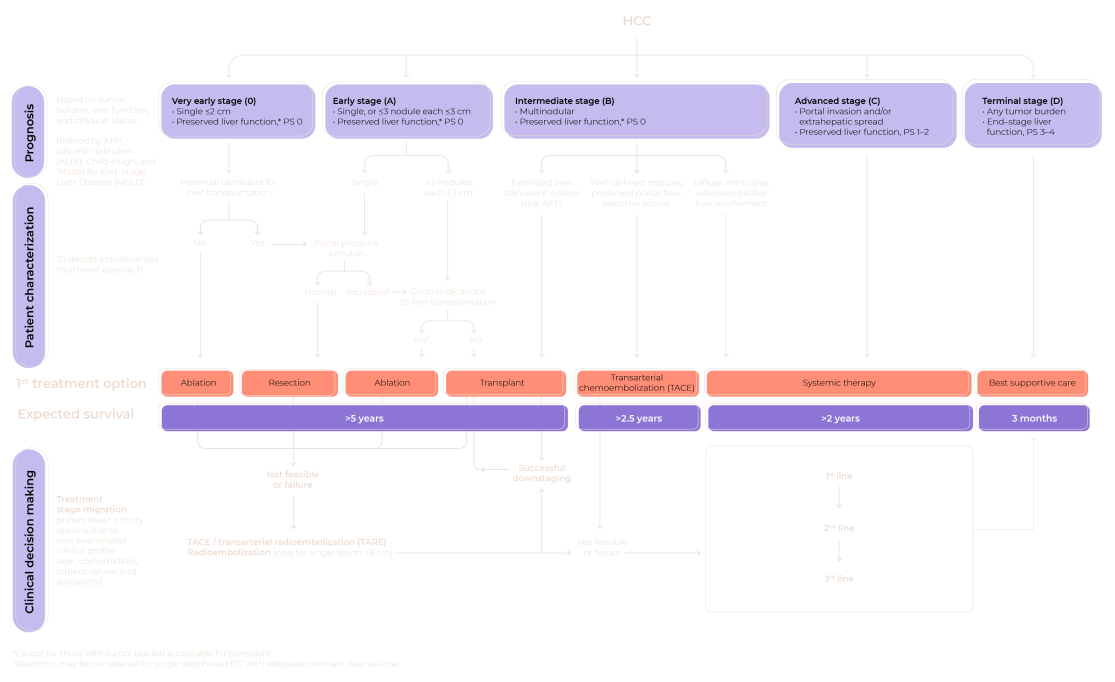
BCLC is the most prevalent and widely cited staging system globally for prognostic prediction and treatment allocation.10,20,21Its use is recommended by the AASLD due to its incorporation of liver dysfunction and ECOG PS, external validation in multiple cohorts, and ease of use in clinical practice.22

Treatment choices are guided by prognostic variables and disease stage within the BCLC system:22

Clinical Guidelines Chart
Quote-img

Treatment decision making in advanced HCC requires a multidisciplinary approach and consideration of several factors.

Let Lorem Ipsum be your compass in navigating the complexities and latest developments in HCC patient care.

Sign up to our email updates for the latest news, resources, and educational materials.